
-
Princess Cut Colorless Moissanite Engagement Ring - Plain Band
Regular price From $149.99Regular price -
Trillion Colorless Moissanite Engagement Ring
Regular price From $179.99Regular price -
Pear Colorless Solitaire Moissanite Ring
Regular price From $149.99Regular price -
Radiant Colorless Moissanite Engagement Ring - Pave Band
Regular price From $149.99Regular price -
Oval Colorless Solitaire Moissanite Ring
Regular price From $149.99Regular price -
Cushion Cut Moissanite Split Shank Engagement Ring
Regular price From $149.99Regular price -
Emerald Cut Colorless Moissanite Engagement Ring Eternity Band
Regular price From $149.99Regular price -
Emerald Cut Moissanite Half Eternity Engagement Ring
Regular price From $149.99Regular price -
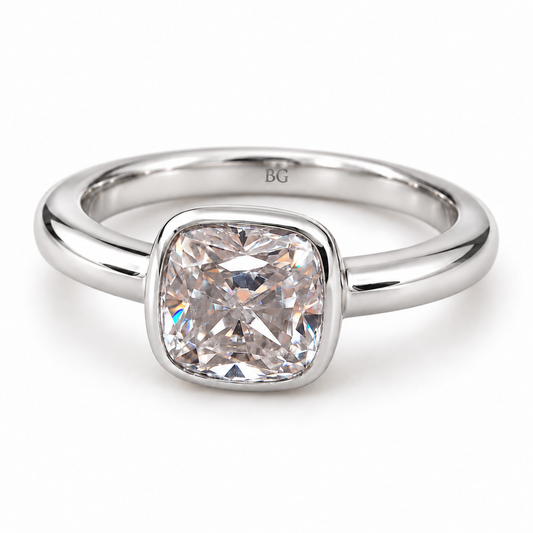
Cushion Cut Moissanite Bezel Engagement Ring
Regular price From $149.99Regular price -
Oval Cut Moissanite Half Eternity Engagement Ring
Regular price From $149.99Regular price -
Pear Cut Green Moissanite Halo Engagement Ring
Regular price From $149.99Regular price -
Emerald Colorless Solitaire Moissanite Ring
Regular price From $149.99Regular price -
Asscher Colorless Solitaire Moissanite Ring - Plain Band
Regular price From $149.99Regular price -
Oval Cut Moissanite Four-Prong Solitaire Engagement Ring
Regular price From $149.99Regular price -
Marquise Cut Moissanite Solitaire Engagement Ring
Regular price From $149.99Regular price -
Round Cut Moissanite Split Shank Engagement Ring
Regular price From $149.99Regular price -
Cushion Cut Moissanite Plain Band Engagement Ring
Regular price From $149.99Regular price -
Cushion Cut Colorless Moissanite Engagement Ring - Halo
Regular price From $149.99Regular price -
Asscher Cut Moissanite Half Eternity Engagement Ring
Regular price From $149.99Regular price -
Radiant Cut Moissanite Halo Engagement Ring
Regular price From $149.99Regular price -
Round Colorless Moissanite Engagement Ring - Round Halo
Regular price From $149.99Regular price -
Cushion Cut Colorless Moissanite Engagement Ring - Pave Band
Regular price From $149.99Regular price -
Pear Cut Moissanite Halo Engagement Ring
Regular price From $149.99Regular price -
Princess Cut Moissanite Engagement Ring - Ball Prong Wide Band
Regular price From $149.99Regular price




Common Questions
Is a solitaire secure for everyday wear?
Yes. Six prongs or a bezel give the most security, and moissanite is hard enough for daily wear. Have the prongs checked by a jeweler every year or two, as you would with any ring.
Which wedding band pairs with a solitaire?
Almost any. A low setting sits flush with a straight band, while a tall cathedral setting leaves room for most bands. Message us with your ring and we will suggest one.
Does a solitaire look plain?
It looks classic. If you want more sparkle without a halo, choose a pave band, a hidden halo or a double claw setting.