
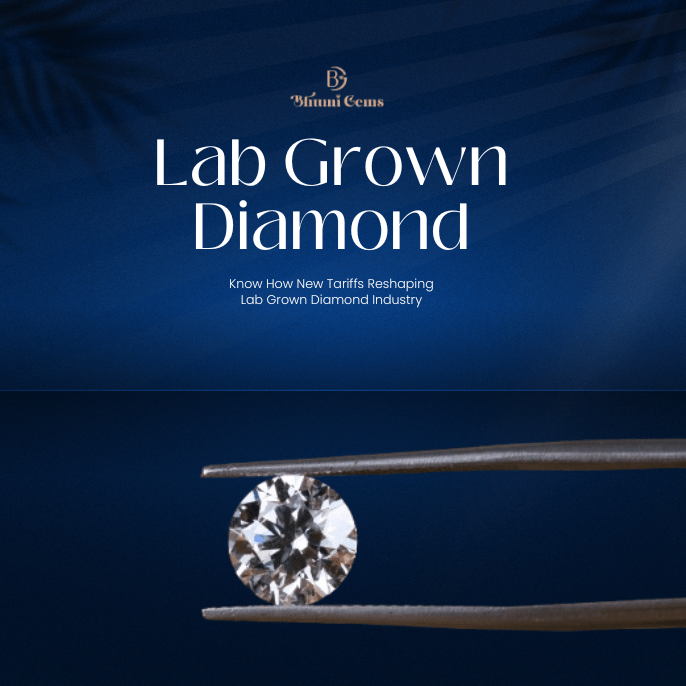
During the past few years, the lab grown diamond industry has experienced meteoric growth, challenging traditional mining operations and attracting consumers with ethical, sustainable, and affordable alternatives to natural diamonds. However, this industry has been experiencing a shift with the new tariffs imposed by the United States on imported synthetic diamonds. This has affected global supply chains and pricing models, sparking widespread debate and strategic recalibrations across the industry. This blog offers detailed information on new trade policies and tariffs that are impacting production hubs, consumer behavior, pricing, and the future competitiveness of the lab-created diamond market.
Understanding the New Tariff Shifts
The United States has proposed a new round of tariffs targeting non-essential imports, which include synthetic diamonds, created in laboratories. Here is the new structure applied to the industry:
- Tariffs could range between 15% and 27%, depending on the country of origin.
- India, a major producer and exporter of synthetic diamonds, faces the steepest rate of 27%.
- China may encounter even higher duties, possibly up to 54%, while jurisdictions like UAE, Singapore, and Turkey receive more favorable treatment.
These measures, designed to boost domestic manufacturing, have raised concerns among international producers and American retailers alike.
Impact on Pricing and Retail Margins
One of the primary reasons for lab grown diamonds being in high demand has been its affordability. Typically marked 30% to 70% lower than natural diamonds, these products offer value without sacrificing quality. However, the introduction of tariffs could lead to:
- A 10% to 25% increase in wholesale prices, depending on size and quality.
- Shrinking profit margins for U.S. retailers who have heavily stocked up on foreign-manufactured stones.
- A potential slowdown in consumer demand, especially in middle-range income segments.
The possibility of passing these costs to end consumers is high, which may dampen the category’s explosive growth if not managed carefully.
Decoding the Strategic Shifts in Global Supply Chain
The new tariffs have led to new trade barriers, which has led many companies to explore different ways to diversify their operations and reduce exposure:
Supply Chain Adjustments
- Manufacturing units are getting moved from India or China to countries with more favorable trade agreements, such as Thailand, Singapore, or the UAE.
- Increasing polishing operations in the U.S. or North America to create partial domestic goods and lower tariff liability.
- Forming joint ventures or strategic alliances in neutral regions to hedge against future policy changes.
Technology Transfer
- Investing in automation and AI-driven polishing tools to offset higher labor costs in non-traditional markets.
- Exploring eco-friendly energy sources to attract sustainability-conscious buyers and potentially qualify for environmental trade exemptions in the future.
These changes are not just reactive but also serve as long-term investments in operational resilience.
Influence on Consumer Trends
The actual demand for lab grown diamonds lies not just in their affordability, but also in their ethical and environmental benefits. Today’s consumers falling under the bracket of millennials and Gen Z value transparency, conflict-free sourcing, and sustainability. According to recent data by CNBC’s 2025 Real Weddings Study by The Knot:
- Around 52% of lab grown diamond rings for engagement purposes sold in the U.S. in 2024 featured synthetic stones.
- Moreover, retailers like Bhumi Gems, Brilliant Earth, and James Allen reported double-digit growth in lab-grown sales year-over-year.
However, these same consumers are also price-sensitive. A significant jump in costs may force them to reevaluate, especially when natural diamond prices have also softened in the wake of economic volatility. Thus, the balancing act will be between preserving ethical value propositions and retaining price competitiveness in a more challenging regulatory environment.
Challenges and Opportunities for U.S. Retailers
Due to the sudden change in new tariffs, many US retailers are now facing several pressing decisions:
- Inventory Planning: With increased costs, purchasing large quantities from tariffed countries may not be viable.
- Rebranding and Storytelling: Highlighting domestic polishing or finishing processes could help soften the impact of higher prices.
- Vertical Integration: Some companies may explore acquiring overseas production facilities or building in-house capabilities.
While the road ahead poses hurdles, companies that innovate quickly and transparently communicate with customers can still thrive.
Final Thoughts
The new tariffs represent a pivotal moment for the lab grown diamond industry. While they introduce cost pressures and operational complexity, they also force a reevaluation of value chains, product narratives, and technological pathways.
For U.S. buyers, a moderate price increase may be offset by the strength of the story behind each stone. And for brands who adapt to reshaping logistics, communication, and product lines, this could be a watershed opportunity. Bhumi Gems, a popular U.S. retailer known for responsibly sourced and ethically crafted gemstones, is already adjusting its approach that is highlighting domestic processing and green credentials to maintain value for discerning customers.
